Transportation Heating and Cooling
R2026bIn this section, you can find examples on heating and cooling systems for transportation applications.
Featured Examples
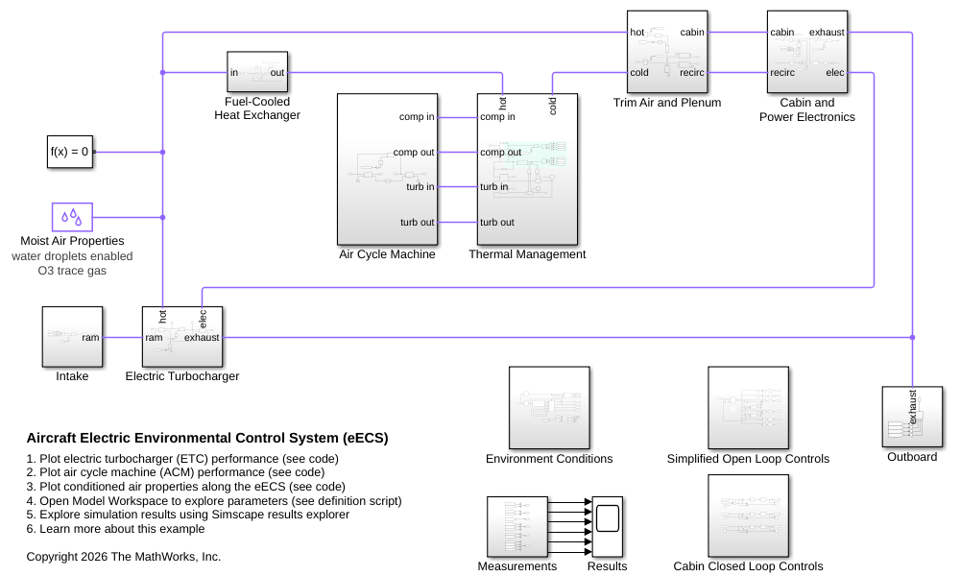
Aircraft Electric Environmental Control System (eECS)
Models an electric Environmental Control System (eECS) for a commercial passenger aircraft. Unlike traditional pneumatic systems that bleed hot air from the engines, this architecture uses electrically driven turbochargers to compress fresh ram air, improving engine efficiency and reducing fuel consumption. The model simulates a complete air conditioning pack including an electric turbocharger (ETC), a fuel-cooled heat exchanger, an air cycle machine (ACM), a thermal management system with primary and secondary heat exchangers, and cabin thermodynamics with passenger thermal and moisture loads. A hybrid control strategy combines open-loop feedforward commands based on the stages of the flight cycle with closed-loop PI regulation of cabin pressure, temperature, and air flow. The simulation covers a full flight cycle from ground taxi through climb, cruise, descent, and landing.
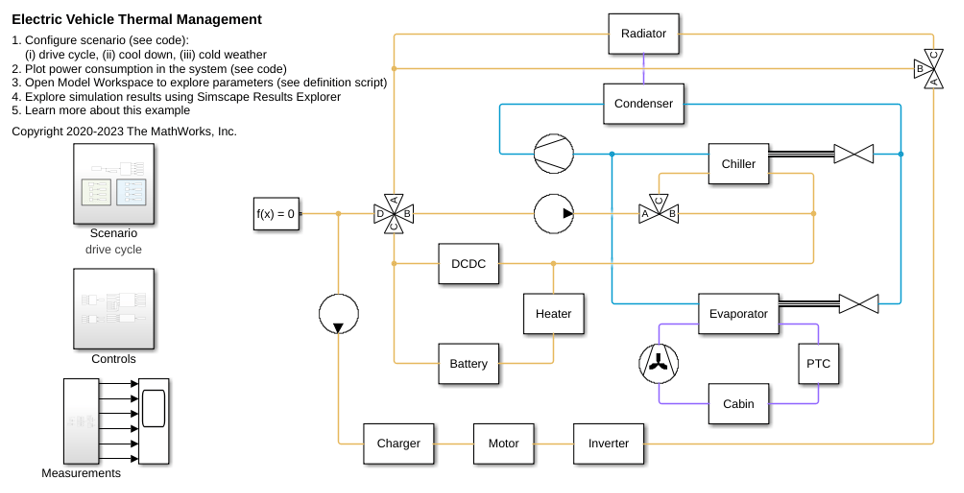
Electric Vehicle Thermal Management
Model the thermal management system of a battery electric vehicle.
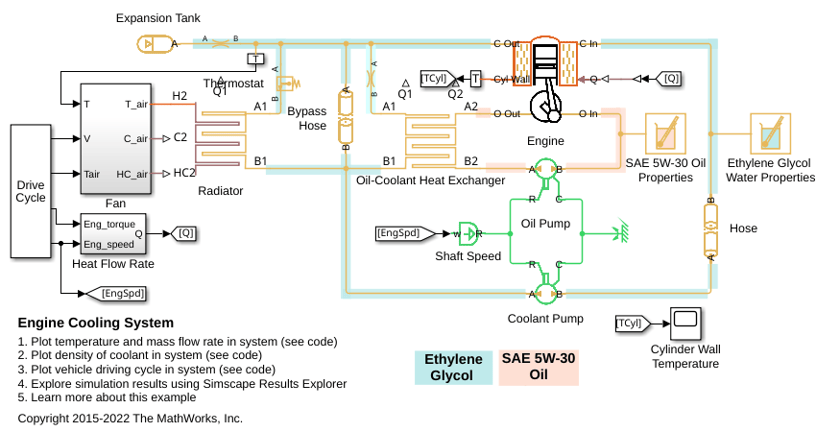
Engine Cooling System
Model an engine cooling system with an oil cooling circuit.
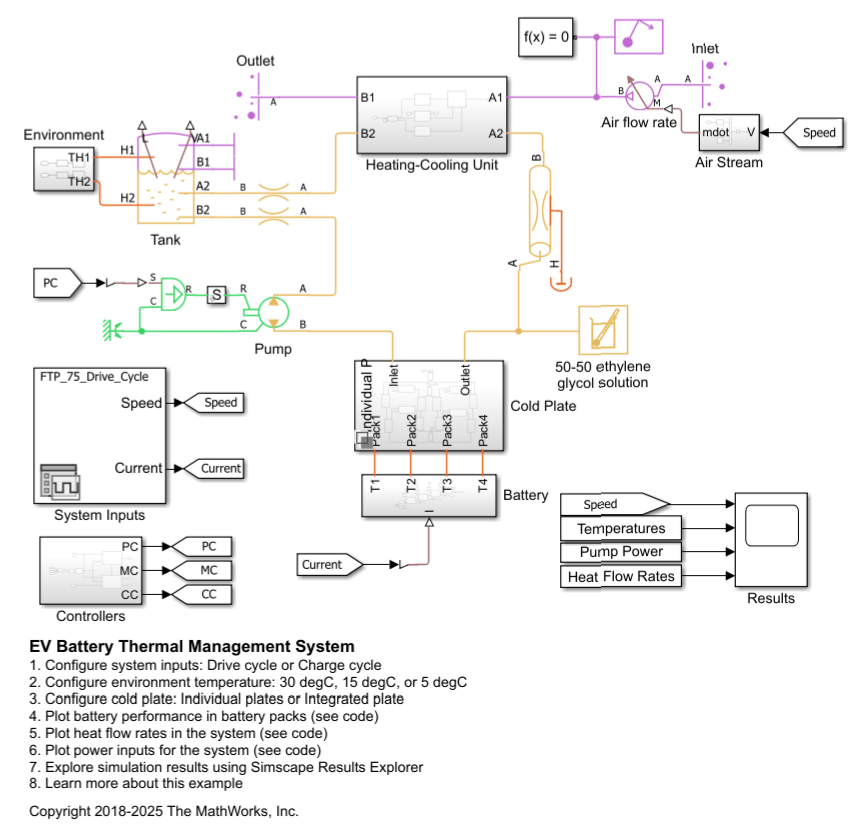
EV Battery Thermal Management System
An Electric Vehicle (EV) battery heating-cooling system. Maintaining the battery temperature within an optimal range is important for efficient charging and discharging. The model simulates either the FTP-75 drive cycle or a fast charge cycle at different environment temperatures. A thermal liquid coolant circuit conveys heat between the battery and the heating-cooling unit. For more information on designing EV battery cooling systems, see EV Battery Cooling System Design.
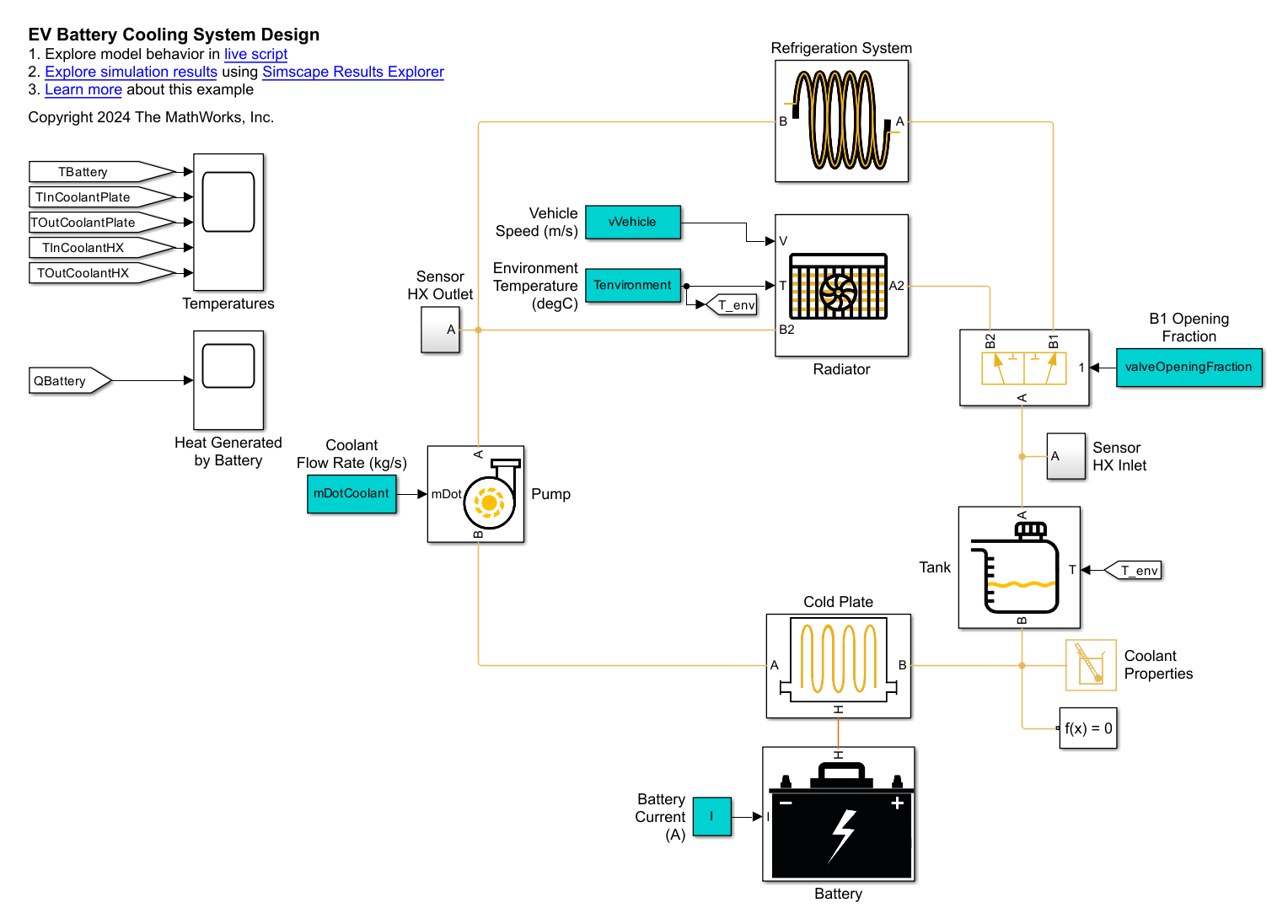
EV Battery Cooling System Design
Explores several questions related to heat exchanger sizing and system performance. The example answers the questions using fundamental heat transfer principles, and then confirms the behavior in test harness models and a full system model.
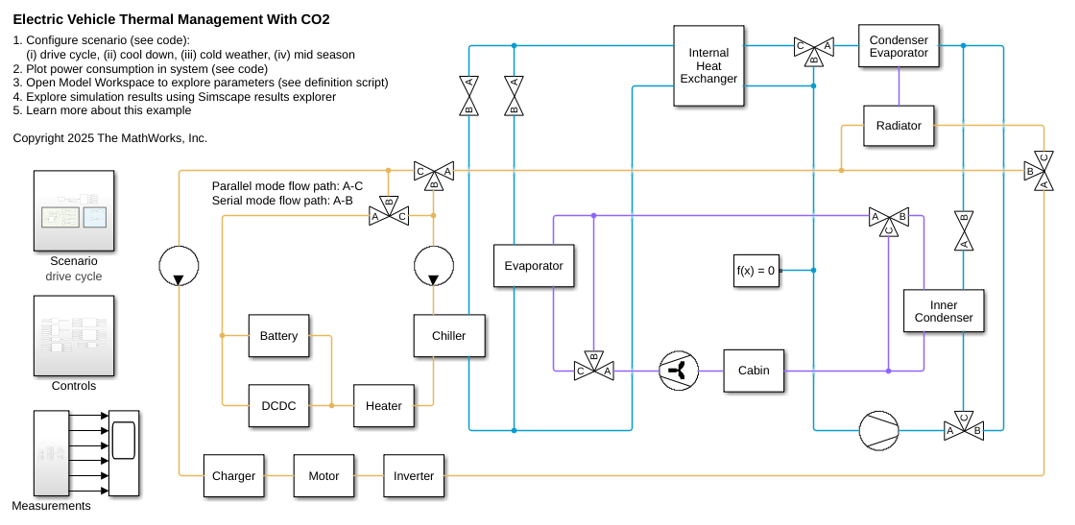
Electric Vehicle Thermal Management With CO2
Models the thermal management system of a battery electric vehicle (BEV) that uses a transcritical CO2 (R-744) refrigeration cycle for cooling and heating. The system consists of two liquid coolant loops, a CO2 refrigerant loop, and a cabin air HVAC loop. The thermal loads are the batteries, the power electronics, and the cabin.
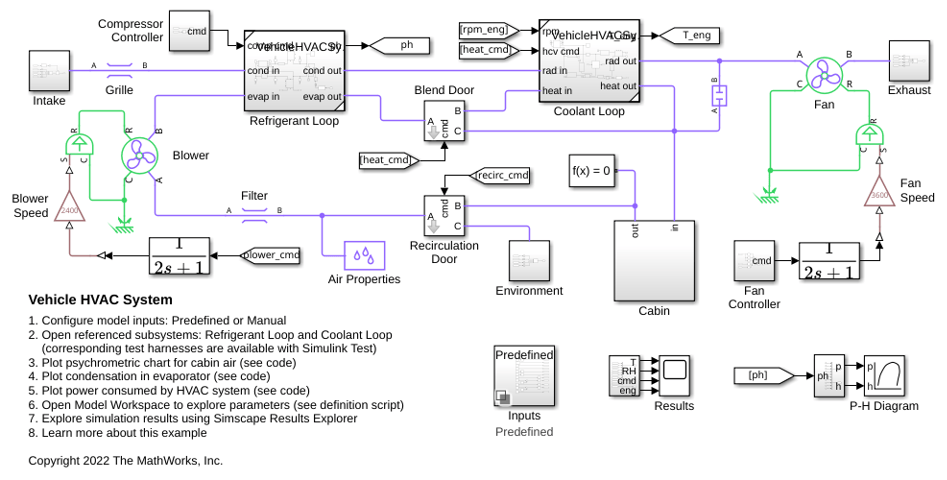
Vehicle HVAC System
Models the heating and cooling system of a passenger car. The cabin is represented as a volume of moist air exchanging heat with the external environment. The blower drives moist air through the evaporator, blend door, and heater core before returning to the cabin. The blend door controls the amount of air flow through the heater core. The recirculation door controls whether air is brought in from the external environment or from within the cabin.

