Latest Contributions

ASME will be hosting a four-part conversation series from March 22-25, that will educate and equip mechanical engineers with workforce strategies. The series will bring together leaders and industry experts in education to explore which new skills will be taught to young engineers, what training mid-career engineers need in order to return to work as the pandemic subsides, and how much more can be done to confront the labor and skills gap in 2021 and beyond.
I was honored to be asked to participate in the first panel discussion along with distinguished faculty from MIT and the University of Colorado Boulder. I would encourage all of our customers involved in online teaching and learning to attend. More details on the panel discussion that features MathWorks response to COVID-19 are below:
The Evolution of Engineering Education Post-COVID-19 (March 22): The transition to remote learning was a shock for many universities and colleges across the country. Professors had to transform their in-person lecture into an engaging online class, and students had to take on more self-learning responsibilities. What impact will this change in teaching have on the future of education? This conversation will focus on the shift to online education at universities, the digital engineering skills students will need to learn, and how academia and industry can work together to prepare the young engineers entering the workforce.
The Evolution of Engineering Education Post-COVID-19 : https://app.webinar.net/vlOW9kK90wm?mcc=EDIT

I just started my MPhil in power systems and we are doing load flow analysis. I am completely lost throughout the gauss seidel and newton Raphson methods using MatLab. can I get help, please?

Prof. Duarte Antunes from Eindhoven University of Technology explains how he's been using MATLAB live scripts for teaching an online "Optimal Control and Dynamic Programming" course.

This is a great presentation from 2 professors introducing how they use MATLAB in their physics courses. MATLAB Grader and Live Scripts are discussed in detail.
Here is the abstract:
-----
Guest Presenters: Michele McColgan, Siena College and Duncan Carlsmith, UW Madison
The meeting will start with short presentations, and then we'll have time for questions and discussion in a colloquial setting. The presenters use MATLAB in their courses, and this meeting will provide a good opportunity to see the functionality that MATLAB affords. However, the presenters' approach to integrating computation is relevant generally; thus, this meeting should be of great interest, even if you are not a MATLAB user.
-----
Webinar from PICUP .

Hi everyone,
I am a third year BEng Energy Engineering student. I am looking at the design, modelling and peformance of an HVDC power converter for use in offshore wind for my final year dissertation. Power electronics is a new area for me and I am also new to simulink/ simscape elctrical.
Could anyone provide some useful examples of MMC (in particular rectifiers), or some advice for designing in simscape electrical. I am struggling with the design of PWM control especially. I aim to make a scaled down version of the MMC in Simulink but so far have had no luck. If anyone can help I would be really appreciative.
Thanks in advance.
Joe
WiDS Datathon 2021 is going on right now. The focus of the Datathon this year is "on creating models to classify whether patients have been diagnosed with a certain type of diabetes." You can register and participate until March 1.
Also, take a look at this blog post on the MATLAB benchmark code for this datathon.
MATLAB Benchmark Code for WiDS Datathon 2021
There are also various online challenges by MathWorks that students may be interested. Here are the winners from last year's Simulink Student Challenge. There was also a MATLAB Online Live Editor Challenge a couple of years ago.

- the names defined as "keywords" do not in themselves involve function calls to publicly visible routines. These keywords currently include 'break', 'case', 'catch', 'classdef', 'continue', 'else', 'elseif', 'end', 'for', 'function', 'global', 'if', 'otherwise', 'parfor', 'persistent', 'return', 'spmd', 'switch', 'try', 'while'. There is no functional form of any of these: for example, one cannot use global(s) to declare the name contained in the variable "s" to be global. (However, you can define an "end" method; https://www.mathworks.com/help/matlab/matlab_oop/object-end-indexing.html )
- scalar numeric double precision real-valued constants are handled at parse time, including unary plus and unary minus in front of them
- scalar numeric double precision constants followed immediately by "i" or "j" create a complex-value constant at parse time, including unary plus and unary minus in front of them
- whether a complete complex constant with real and imaginary part is handled at parse time is unknown
- literal character vectors and string objects are handled at parse time
- in sufficiently new versions, int64() and uint64() around an integer constant is handled at parse time. This was a change from previous versions which handled it at run time (after the integer had been converted to double precision...)
- whether any other casts such as uint16() or logical() are now handled at parse time is unknown
- assignment of a compete variable (no indexing, no substructure references, etc.) to a plain variable (no indexing, no substructure references, etc.) does not involve any function calls to publicly visible routines (unless I have overlooked a case involving objects)
- "if" or "while" applied to a scalar logical constant or to a scalar logical variable does not involve any function calls to publicly visible routines. However, it is not known whether there is any method to construct a logical value without calling a MATLAB routine: "true" and "false" are MATLAB routines, not constants, and logical() of a numeric constant might be handled at run time
- "for" in which the range is named as a scalar constant or scalar variable do not involve any function calls to publicly visible routines; for example, "for K = 5"
- defining an anonymous function does not involve any function calls to publicly visible routines
Here's an example of virtualizing a lab course.

MathWorks is please to offer a new training course, Power Electronics Control Design with Simulink and Simscape.
This one-day course focuses on modeling and controlling power electronic systems in the Simulink® environment using Simscape Electrical™. Topics include:
- Modeling direct current (dc) power electronic components
- Controlling the level of fidelity in a model
- Developing controls for power electronics
- Modeling three-phase alternating current (ac) power electronic components
- Controlling power electronics for motor drive applications
Just making sure people are aware of our new Onramp courses. These are great self-learning resources for students.
Released a few months ago:
Released this month:

 Please, I would like to generate triangle signal for pwm. It must start from 0 to 60 degree and then from 120 to 180 degree and then repeat itself. Could you help me if you can by coding or simulink ?
I will attach picture for clarification

Hi there! This is kind of an unusual question, but here it goes. I am a big time Matlab enthusiast and I met some of your representatives at Formula Student Germany back in August. There was a booth were your product was showcased but most importantly there was Matlab merchandise such as stickers, rub-on-tattoos and pens with the mathworks logo being handed out. This merchandise is increadibly popular with me and my nerdy friends. But sadly I didnt bring much with me from the event. Is it possible to get ahold some of it? Is it for sale? Are you willing to sponsor some geeky engineering students?

Please I would be glad if I could be helped with the design of Microturbine coupled with PMSG.

How do you teach subjects like Programming and Numerical Computing hands-on in these challenging times?
Prof Chiranjoy Chattopadhyay at the Dept of Computer Science and Engineering at IIT Jodhpur shares his innovative approach to teaching at a distance in this new Technical Article on Teaching Parallel Computing Online with MATLAB.
The course utilized MATLAB Online , MATLAB Onramp and MATLAB Grader to train students in the basics of technical computing, in addition to using a Hands-on Online GPU workshop organised with the MathWorks Education Team. As a result of this approach to distance teaching, the students have reported good levels of understanding in the main learning outcomes of this course, as indicated in the survey results (below):

Please consider trying out the links above to check if your course might benefit from a similar approach, and feel free to message us if you are interested in learning more.

Hi everybody!I've realized a DC/DC Buck Converter Model with closed loop control system. I need to limit the overshoot in the step response of the submitted system. I've already tried to tune the controller in the PID Tuner by manually adjusting the overshoot by moving the response time slider, as it is said in this article: https://it.mathworks.com/help/slcontrol/gs/automated-tuning-of-simulink-pid-controller-block.html The problem is that it is not accurate. I manage to get an overshoot of 4.77% or 5.4%, whereas i need to set the parameters in order that the overshoot is 5%. Should I use TuningGoal.Overshoot? How am I supposed to do? How should I set the input and output in my model? I've read Matlab documentation but I didn't catch that. Thanks in advance!
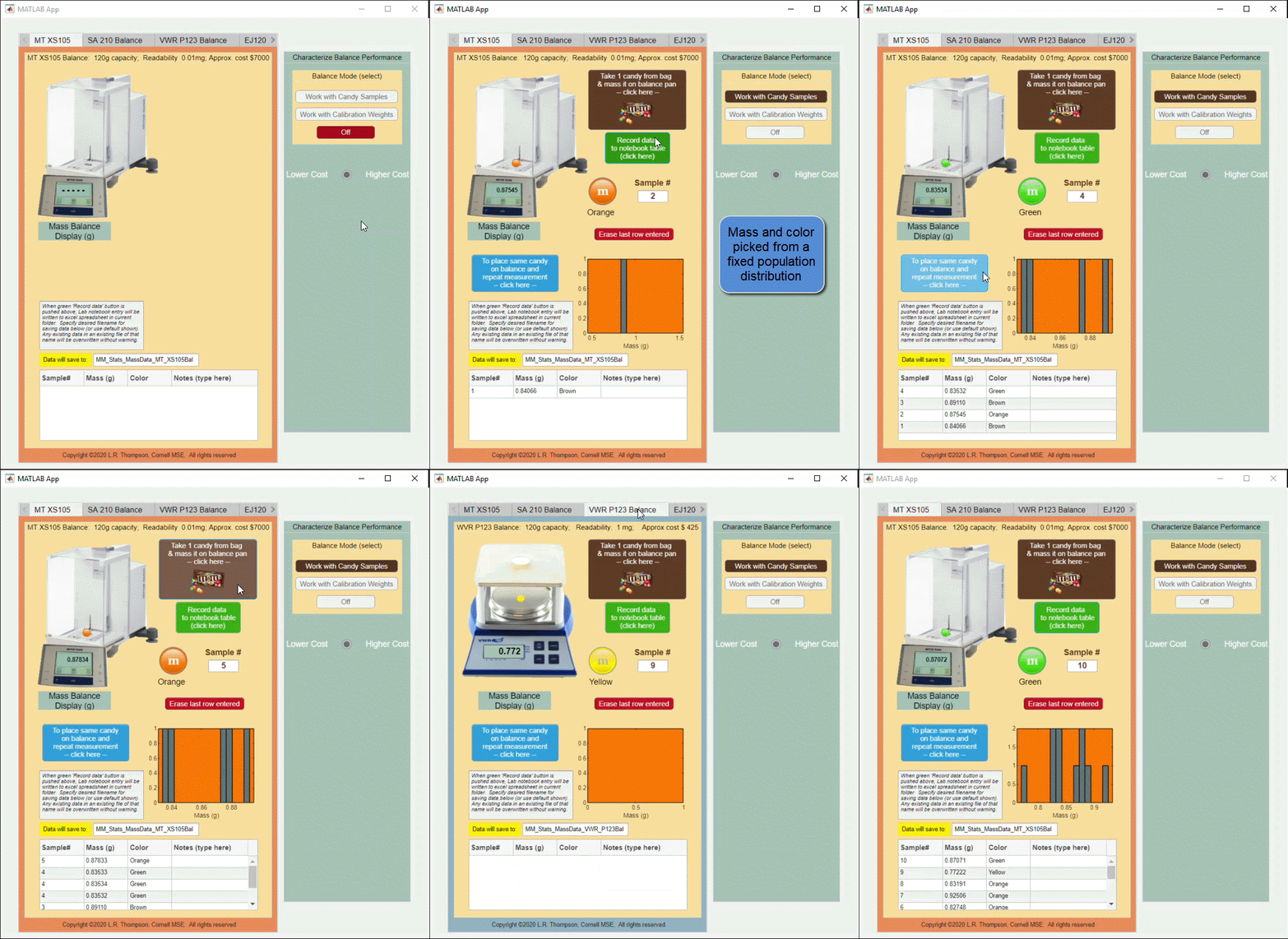
I just highlighted an app on File Exchange for emulating an experiment. Great idea for doing lab classes with software. What I like about this app is that it incorporates statistical variance and measurement noise that comes from physical experiments.
Read more about it here:
https://blogs.mathworks.com/pick/2020/11/20/emulating-a-physical-experiment-of-measuring-mms/

I am currently working on simulink online but I cannot maximize the screen

Hello,
I am trying to simulate a PMSM, which has a Quasi sinusoidal back-emf waveform. Is there any way I can define the back emf to be anything other than Sinusoidal/Trapezoidal?
Thanks in advance. Saurabh Kumar

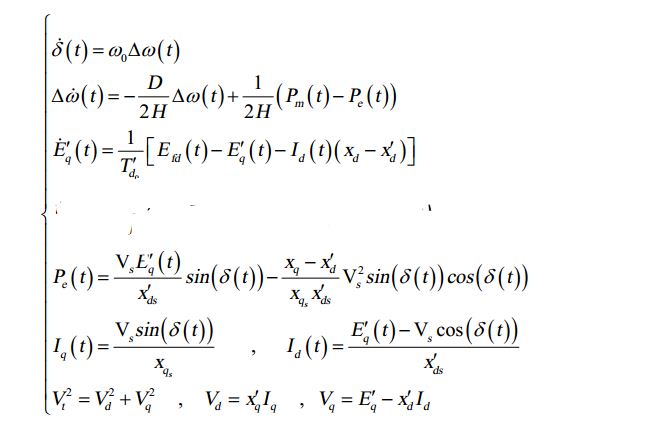
Hi Everyone, I am trying to simulate the third-order model of the synchronous generator (figure below). but I have no idea how to do this. Any help would be great.

Dear power electronics control community,
Since I have not solved the problem and have not found an answer to why I receive such an output, I would be happy when you could help me out. The actual project is much more extensive but easy schematic of what I want to do is here:

For that, I am using 2-level PWM generator: https://se.mathworks.com/help/physmod/sps/powersys/ref/pwmgenerator2level.html In the DC-link (DC voltage after the converter) the DC voltage output should be more-less constant (with a little noise) but right now it very far away from the desired output:

Does anyone have a idea what might cause this problem?
About General
This is the channel to post to if your topic doesn't fit any other channel contexts.
 All technical questions
Community Guidelines MATLAB FAQs